
How much does it cost to renovate a kitchen in Paris?
Renovating a kitchen in Paris can be an exciting yet daunting project, especially in a city where historic charm meets modern living demands. If you’re wondering how much does it cost to renovate a kitchen in Paris, the answer varies widely based on factors like the size of your space, the scope of work, material choices, and whether you’re dealing with a classic Haussmannian apartment or a contemporary loft. On average, a full kitchen renovation in the French capital ranges from €10,000 to €50,000 or more, with mid-range projects landing around €20,000 to €35,000 for a 10-15 square meter space. These figures account for labor, materials, and unexpected challenges unique to Paris, such as navigating strict building regulations or working within compact, high-ceilinged layouts.
For expats or international homeowners, partnering with English speaking builders in Paris can simplify the process, ensuring clear communication and adherence to local norms without language barriers. In this article, we’ll break down the costs, explore current trends, highlight Parisian-specific challenges, discuss materials and accessories, outline the nature of the work involved, and estimate expected durations—all to help you plan a kitchen makeover that blends functionality with that unmistakable Parisian flair.
Understanding the baseline costs starts with the type of renovation you’re envisioning. A basic refresh—perhaps repainting cabinets, updating hardware, and installing new appliances—might cost €5,000 to €15,000 in Paris, where labor rates hover around €50-€80 per hour for skilled tradespeople. This is ideal for renters or those on a tight budget, focusing on cosmetic upgrades without structural changes. Moving up to a moderate renovation, which includes new countertops, flooring, and minor layout tweaks, expect to spend €15,000 to €30,000. Here, you’re likely incorporating energy-efficient elements to comply with France’s evolving eco-regulations, such as low-energy appliances that qualify for subsidies like MaPrimeRénov’. For a luxury overhaul, complete with custom cabinetry, high-end fixtures, and integrated smart tech, budgets can soar to €40,000-€70,000 or beyond, especially in upscale arrondissements like the 7th or 16th, where property values justify the investment. These costs are inflated by Paris’s urban density: delivery fees for materials can add €500-€1,000 due to narrow streets and limited parking, and VAT at 10% for renovations in older homes (over two years) further impacts the bottom line. Home renovation contractors in Paris often recommend allocating 10-15% extra for contingencies, as discovering outdated plumbing during demo is common in century-old buildings.
Current trends in kitchen renovation reflect Paris’s blend of heritage and innovation, emphasizing sustainable, space-savvy designs that honor the city’s culinary culture. Regenerative luxury is at the forefront, with homeowners opting for materials that evolve beautifully over time, like self-patinating brass faucets or adaptive stone surfaces that gain character with use. Curved forms are softening the rigid lines of traditional French kitchens, incorporating rounded islands or arched shelving to create a more inviting, human-centric flow—perfect for entertaining in small Parisian spaces. Textiles play a starring role too, with damask revivals adding opulent patterns to backsplashes or window treatments, while painterly plaids and tasselled fringes bring tactile depth. Craft-focused elements, such as jacquard fabrics with luminous sheens or graphic performance materials for aprons and mats, merge functionality with artistry. Architectural details like panoramic wallcoverings depicting French countryside scenes or built-in borders for seamless zoning are popular, especially in open-plan conversions that nod to Haussmann’s grand visions. Color palettes draw from the Nouvelle Haussmann style: 60% warm neutrals like soft beiges, 30% earth tones such as terracotta, and 10% accents in deep blues or greens for a balanced, timeless vibe. Expressive marble veining drenches countertops and islands, while large-scale art—think Pop Art vibrancy or Superflat influences—turns walls into galleries. Home automation is subtly integrated, with voice-controlled lighting and appliances enhancing efficiency without clashing with historic aesthetics. For Parisians, these trends prioritize multifunctionality: compact, modular units that double as dining areas, reflecting the city’s fast-paced lifestyle where kitchens are social hubs for aperitifs and gourmet meals.
Yet, renovating a kitchen in Paris comes with distinct challenges that can influence both costs and timelines. The city’s historic fabric—dominated by Haussmannian buildings with protected facades—means structural changes require approvals from the Architectes des Bâtiments de France, adding weeks or months to planning and potentially €1,000-€3,000 in fees. Small footprints (often 5-10 square meters) demand clever space optimization, but high ceilings complicate ventilation and lighting installations, risking higher energy bills if not addressed with proper insulation. Humidity from the Seine River exacerbates issues like mold in lower-level apartments, necessitating moisture-resistant materials and advanced extraction systems that bump costs by 10-20%. Logistical hurdles are rampant: maneuvering bulky appliances through narrow spiral staircases or tiny elevators in central arrondissements like the 1st or 4th can require cranes, tacking on €500-€2,000.
Noise ordinances restrict work to 8am-7pm weekdays, slowing progress in densely populated neighborhoods. Plumbing and electrical systems in older properties are frequently outdated, with non-standard pipes leading to full replacements at €2,000-€5,000 extra. Sustainability mandates, pushing for low-carbon footprints, mean sourcing eco-certified goods, which can be pricier in Paris’s boutique markets. For English-speaking expats, language barriers with local trades can lead to misunderstandings, underscoring the value of English speaking renovation contractors in Paris who bridge cultural gaps and ensure compliance.
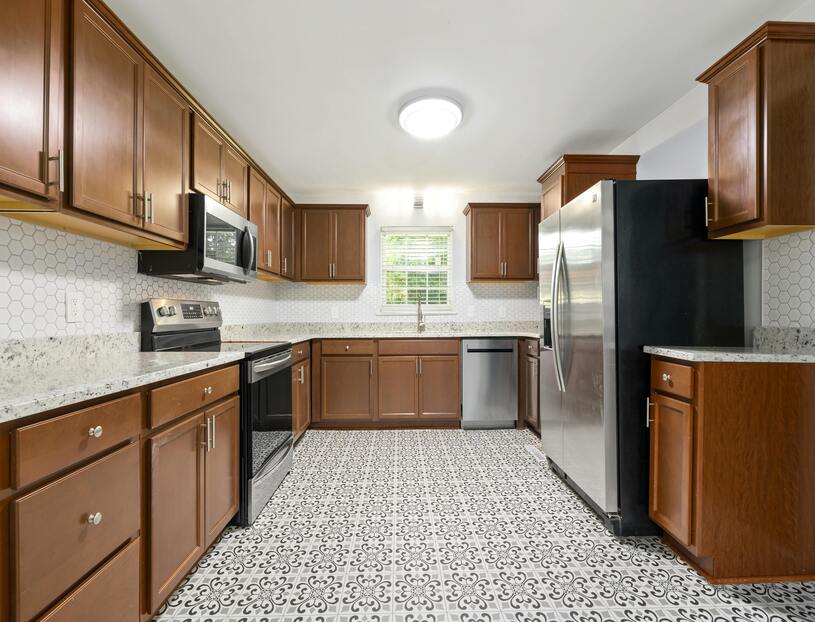
Materials selection is pivotal in determining how much does it cost to renovate kitchen in Paris, balancing durability, aesthetics, and budget. Quartz or granite countertops are favorites for their resilience against daily wear—quartz at €100-€200 per square meter offers stain resistance ideal for wine-loving Parisians, while granite’s natural veining adds luxury at €150-€300. For eco-conscious choices, recycled glass or bamboo surfaces run €80-€150, aligning with regenerative trends. Cabinetry often features solid oak or walnut for a warm, timeless feel, costing €200-€500 per linear meter; opt for lacquered MDF at €100-€250 for affordability without sacrificing style. Backsplashes in subway tiles (€20-€50 per square meter) or hand-painted ceramics (€50-€100) evoke French bistros, while marble slabs (€100-€250) provide dramatic flair. Flooring favors porcelain tiles mimicking wood (€30-€80) for easy maintenance in humid climates, or authentic terracotta (€40-€100) for rustic charm. Sinks in stainless steel (€200-€500) or composite (€300-€700) handle heavy use, paired with brass faucets (€150-€400) that patina gracefully. Appliances like integrated fridges (€800-€2,000) or induction cooktops (€500-€1,500) prioritize energy efficiency to meet Parisian eco-standards. Lighting combines recessed LEDs (€50-€150 each) with pendant fixtures (€100-€300) to illuminate high ceilings without overwhelming the space. These choices can swing total costs dramatically—budget €5,000-€15,000 for materials alone in a standard renovation.
Accessories elevate the kitchen’s functionality and personality, often adding €1,000-€5,000 to the bill. Pull-out organizers (€50-€200) maximize drawer space in cramped cabinets, while magnetic knife strips (€20-€50) keep counters clear. Herb gardens or vertical planters (€100-€300) bring greenery to urban settings, tying into sustainable trends. Smart accessories like touchless faucets (€200-€400) or app-controlled ovens (€1,000-€2,000) enhance convenience, especially for busy professionals. Decorative elements—ceramic crocks for utensils (€50-€150) or woven baskets (€20-€100)—infuse French provincial vibes. Wine racks (€100-€500) are a must in Paris, storing bottles horizontally to preserve corks. For lighting accents, under-cabinet strips (€50-€150) highlight prep areas. These add-ons should complement the kitchen’s scale: in tiny Montmartre studios, multifunctional pieces like foldable tables (€200-€400) save space, while larger Neuilly-sur-Seine homes allow for statement islands with built-in seating (€1,000-€3,000).
The nature of the work in a Parisian kitchen renovation typically unfolds in phases, starting with demolition (€1,000-€3,000) to strip old fixtures carefully, preserving moldings or parquet if adjacent. Structural prep follows, including plumbing reroutes (€2,000-€4,000) and electrical upgrades (€1,500-€3,000) for new outlets and lighting. Installation of cabinets and countertops (€5,000-€15,000) requires precision fitting in irregular walls. Flooring and backsplashes (€2,000-€5,000) come next, followed by appliance integration (€3,000-€8,000). Finishing touches like painting (€500-€1,500) and accessory mounting wrap it up. The work demands skilled artisans—tilers for intricate patterns, electricians for norm-compliant wiring—often sourced through English speaking builders in Paris for expat ease. In historic contexts, non-invasive methods like pipe sleeving minimize disruption.
Expected duration varies: a basic refresh takes 2-4 weeks, moderate projects 4-8 weeks, and luxury renovations 8-12 weeks or more, factoring in permit waits (1-3 months) and material lead times. Summers slow things due to artisan holidays, so spring or fall starts are ideal. Delays from inspections or supply chains can extend timelines by 20%, but experienced home renovation contractors in Paris mitigate this with phased scheduling.
In conclusion, calculating how much does it cost to renovate kitchen in Paris involves weighing trends like curved, regenerative designs against challenges such as heritage restrictions and urban logistics. By choosing durable materials, smart accessories, and understanding the phased nature of work, you can achieve a kitchen that’s both practical and quintessentially Parisian. For expats, enlisting English speaking renovation contractors in Paris ensures a smooth, cost-effective experience tailored to your vision.