
The Urgent Need for Energy Efficient Renovation in Paris
Paris is world-renowned for its iconic Haussmannian architecture, but behind those elegant limestone facades lies a growing modern challenge: the « DPE rating » (Diagnostic de Performance Énergétique). As France intensifies its fight against climate change, the energy efficiency of your Parisian apartment has shifted from a secondary concern to a top-tier priority for owners, tenants, and investors alike.
The French government’s recent legislative updates, specifically the « Loi Climat et Résilience », have placed a strict deadline on properties classified as « passoires thermiques » (energy sieves). Apartments with a G or F rating now face a precarious future, including potential bans on rent increases and, eventually, a total prohibition on leasing. In a city where real estate is a premium asset, a poor DPE score can significantly diminish a property’s « market value » and attractiveness.
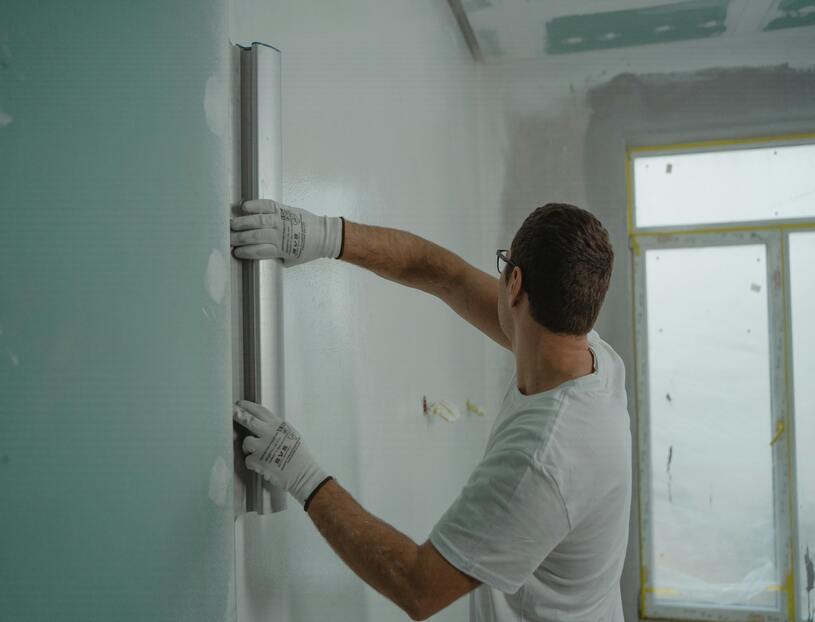
Undertaking an energy efficient renovation in Paris is more than just a regulatory hurdle; it is a strategic investment. By focusing on high-performance interior insulation, window upgrades, and modern heating systems, owners can achieve:
- Enhanced Thermal Comfort: Eliminating the « cold wall » effect during harsh winters.
- Lower Utility Bills: Reducing energy consumption in an era of rising costs.
- Increased Asset Value: Securing a « green premium » in a competitive market.
Navigating the complexities of « ABF heritage regulations » and the constraints of historic buildings requires expert guidance. Whether you are aiming to jump from a G to a D or seeking a total « low-consumption » transformation, understanding the roadmap to efficiency is the first step toward future-proofing your home.
Paris is an architectural masterpiece, a city where limestone facades and zinc roofs tell stories of centuries past. However, beneath the romantic aesthetic of a Haussmannian apartment lies a modern-day challenge that is currently keeping property owners and investors awake at night: the Diagnostic de Performance Énergétique, or simply, the DPE rating.
As of 2026, the energy efficiency of a Parisian home is no longer just a « nice-to-have » feature; it has become a legal and financial necessity. With the French government’s aggressive stance on « passoires thermiques » (energy sieves), failing to improve a poor energy rating can lead to rent freezes, bans on leasing, and a significant drop in property value.
Whether you are a landlord looking to comply with the Loi Climat et Résilience or a homeowner wanting to increase your « thermal comfort » while lowering utility bills, this comprehensive guide explores the strategies, costs, and technical nuances of an energy-efficient renovation in Paris.
1. Understanding the DPE: The New Gold Standard of Real Estate
The DPE rating is a scale from A (extremely efficient) to G (extremely inefficient). It measures two primary factors:
- Primary Energy Consumption: Calculated in $kWh/m²/year$.
- Greenhouse Gas Emissions: Calculated in $kg CO₂/m²/year$.
Since the reform in July 2021, the DPE is no longer merely informative; it is « legally enforceable » (opposable). This means that if a buyer or tenant discovers the rating was falsified or inaccurately calculated, they have legal recourse.
The Regulatory Calendar: Why the Clock is Ticking
For owners of apartments in Paris, the pressure is mounting. The French government has established a strict timeline for the rental market:
- January 1, 2025: All G-rated properties are banned from being newly leased or renewed.
- January 1, 2028: The ban extends to F-rated properties.
- January 1, 2034: The ban extends to E-rated properties.
If your apartment falls into the F or G category, it is officially classified as a « passoire énergétique ». Beyond the inability to rent, you are also prohibited from increasing the rent, even if the lease allows for an annual indexation.
2. The Haussmannian Challenge: Why Paris is Unique
Improving the DPE of a Paris apartment is significantly more complex than renovating a modern house in the suburbs. Most Parisian buildings date back to the late 19th century and are subject to strict heritage protections under the ABF (Architectes des Bâtiments de France).
The Stone Wall Dilemma
Haussmannian buildings are constructed from cut limestone. While stone provides excellent « thermal inertia » (keeping the apartment cool in summer), it offers very little actual insulation. Because you cannot modify the exterior facade due to heritage laws, External Thermal Insulation (ITE) is almost always off the table. This leaves Internal Thermal Insulation (ITI) as the only viable path, which unfortunately reduces the internal living space—a precious commodity in Paris where every square meter can cost over €12,000.

The Collective Heating Issue
Many Paris apartments are part of a copropriété (condominium) with collective heating. Even if you insulate your individual unit perfectly, your DPE rating might still be dragged down by an aging, inefficient collective gas boiler in the basement.
3. The Starting Point: The Energy Audit
Before swinging a sledgehammer, the most critical step is the « Audit Énergétique ». While a standard DPE tells you your current grade, a detailed audit provides a roadmap for improvement.
An auditor will use thermal imaging and data modeling to tell you exactly where the heat is escaping. In most Paris apartments, heat loss is distributed as follows:
- Walls: 20-25%
- Windows/Joinery: 15-20%
- Roof (if on the top floor): 25-30%
- Thermal Bridges: 5-10%
Ask your professional for a « DPE Projeté » (Projected DPE). This document simulates the rating you will achieve after specific works are completed, which is often required to secure government grants like MaPrimeRénov’.
4. Strategy #1: Internal Wall Insulation (ITI)
Since the facade is untouchable, you must insulate from the inside. This is the single most effective way to jump from a G to a D or C rating.
Choosing the Right Materials
In Paris, space is money. You want the highest « R-value » (thermal resistance) with the thinnest possible profile.
- Mineral Wool (Glass or Rock): Common and affordable, but requires a thickness of 10-12cm to be effective.
- Polyurethane (PUR) Panels: Very thin and highly efficient, but not the most eco-friendly.
- Wood Fiber or Hemp Lime: Excellent for older stone buildings because they are « breathable », preventing moisture buildup and mold—a common issue in old Parisian walls.
Managing Thermal Bridges
A thermal bridge is a point in the building’s structure where heat bypasses insulation (e.g., where an internal wall meets an external wall). A professional artisan will ensure that insulation is continuous, often by insulating a small return on the perpendicular walls to « break » the bridge.
5. Strategy #2: High-Performance Windows and Joinery
Those beautiful, tall Parisian windows with their « crémone » bolts are often the primary source of drafts.
Double Glazing vs. « Vacuum Glazing »
Standard double glazing is heavy and thick. Sometimes, the existing wooden frames of a Haussmannian apartment cannot support the weight.
- Renovation Double Glazing: Thin profiles designed to fit into existing frames.
- Vacuum Glazing (Fineo, etc.): A modern marvel. It provides the insulation of triple glazing but is as thin as single glazing. It is the « holy grail » for high-end Paris renovations.
Don’t forget the « shutter boxes ». In many old apartments, the space above the window where the rolling shutter sits is uninsulated, acting like a giant straw sucking cold air into the room.
6. Strategy #3: Upgrading Heating and Hot Water
The DPE doesn’t just look at how much heat you lose; it looks at how much energy you use to stay warm.
The Death of « Toasters »
Many Paris studios are equipped with old-fashioned electric convectors, often called « toasters ». These are energy hogs and will almost guarantee a poor DPE.
- Solution: Replace them with « Inertia Radiators » (ceramic or fluid). They continue to emit heat long after they have stopped drawing electricity.
Individual Heat Pumps (Air-Air)
While difficult to install in Paris due to the need for an external unit (which requires Copropriété and often City Hall approval), Air-Air Heat Pumps are incredibly efficient for both heating and cooling.
Hot Water
The « Ballon d’eau chaude » (electric water heater) is a major energy consumer. If space permits, a thermodynamic water heater—which uses a small integrated heat pump—can significantly boost your DPE score.
7. Strategy #4: Ventilation – The Invisible Necessity
When you insulate a Paris apartment and install airtight windows, you turn it into a thermos. Without proper ventilation, humidity rises, leading to mold and poor air quality.
The DPE algorithm penalizes apartments without a VMC (Ventilation Mécanique Contrôlée).
- VMC Simple Flux Hygroréglable: A smart fan that increases speed when humidity is detected.
- VMC Double Flux: More difficult to install in an apartment but recovers heat from outgoing air to warm the incoming fresh air.
In Paris, where space for ducting is limited, « decentralized VMC units » (which go directly through an external wall) are becoming a popular « hack » to satisfy DPE requirements.
8. Financial Aid: How to Pay for Your Renovation
The cost of an energy-efficient renovation in Paris can range from €500 to €1,500 per square meter. Fortunately, several financial levers exist.
MaPrimeRénov’
This is the flagship government grant. It is tiered based on your income. Even high-income earners can access some aid, especially for « global renovations » that move the property up several DPE classes.
CEE (Certificats d’Économie d’Énergie)
These are grants funded by energy suppliers (like EDF or Engie). They can often be combined with MaPrimeRénov’.
Eco-PTZ (Zero-Interest Loan)
You can borrow up to €50,000 at 0% interest to fund energy-efficiency works, provided the work is carried out by an RGE (Reconnu Garant de l’Environnement) certified contractor.
9. The « Green Premium »: Value Beyond Compliance
Improving your DPE isn’t just about avoiding fines; it’s about « Valuation ».
Studies in the Ile-de-France region show a clear « Green Premium ». An apartment with a C rating can sell for 5% to 15% more than an identical apartment with a G rating. In a market where buyers are increasingly wary of « future renovation costs, » a high DPE rating is a massive competitive advantage.
Furthermore, « Thermal Comfort » is a luxury. Being able to walk barefoot in your living room in January without feeling a draft from the windows is a quality-of-life improvement that transcends numbers on a page.
10. Practical Step-by-Step Guide for Owners
If you own a property in Paris and want to start this journey, follow this sequence:
- The Official DPE: Get a baseline. If you are a G or F, don’t panic, but start planning.
- Consult the « Syndic »: Find out if there are plans for collective building insulation or boiler replacement. This could save you thousands.
- The Audit: Hire an independent energy auditor to create a multi-scenario plan.
- The RGE Search: You must hire RGE certified contractors to be eligible for any government aid.
- The Paperwork: Apply for grants before signing any quotes.
- The Works: Start with insulation and ventilation, then move to heating.
- The Final DPE: Once the works are finished, have a new DPE issued to reflect your apartment’s new « green » status.
Conclusion: A Greener Future for Paris
Renovating a Paris apartment for energy efficiency is a daunting task, blending « cutting-edge technology » with « historic preservation ». However, it is an essential evolution. By improving the DPE rating of our homes, we are not just complying with the law; we are preserving the livability of Paris for the next century.
An energy-efficient apartment is quieter, warmer, more valuable, and—most importantly—ready for the future. The transition from a « passoire » to a sanctuary is the best investment a Parisian owner can make in 2026.